Public meetings

Decisions about your street are made in public.

A rezoning, a new subdivision, a contract. Each one is voted on at a public meeting. The agenda is posted ahead of time, and anyone may go.

See upcoming meetings

Rezonings

What can be built on a lot.

Owners within 300 feet get a notice in the mail, in English and Spanish, 10 to 30 days before the City Plan Commission’s hearing. City Council holds the final hearing, about four to five weeks later. If the commission recommends denial, the case ends there unless the applicant appeals to City Council within 15 days.

Subdivisions

New lots and new streets.

They are drawn on a map called a plat. The City Plan Commission decides most plats itself. If a plat meets the rules, state law says it has to pass, and the commission can’t deny it. That’s called a ministerial decision. Whether a plat meets the rules is the commission’s call.

Contracts

Who the city or the county pays, and for what.

They are on the agenda before the vote.

Everyone is welcome.

Anyone may go, and most meetings take public comment.
Video What the City Plan Commission decides 2:58 · As of Oct 2, 2026 · EN · ES Watch

Who decides what.

We follow three bodies. Each one posts its agenda before it meets.

A rezoning takes this path

  1. City Plan Commission · Public hearing
  2. City Council · Final hearing and vote

About 10 to 12 weeks from application to vote

The city

  1. City Plan Commission

    First hearing on every rezoning

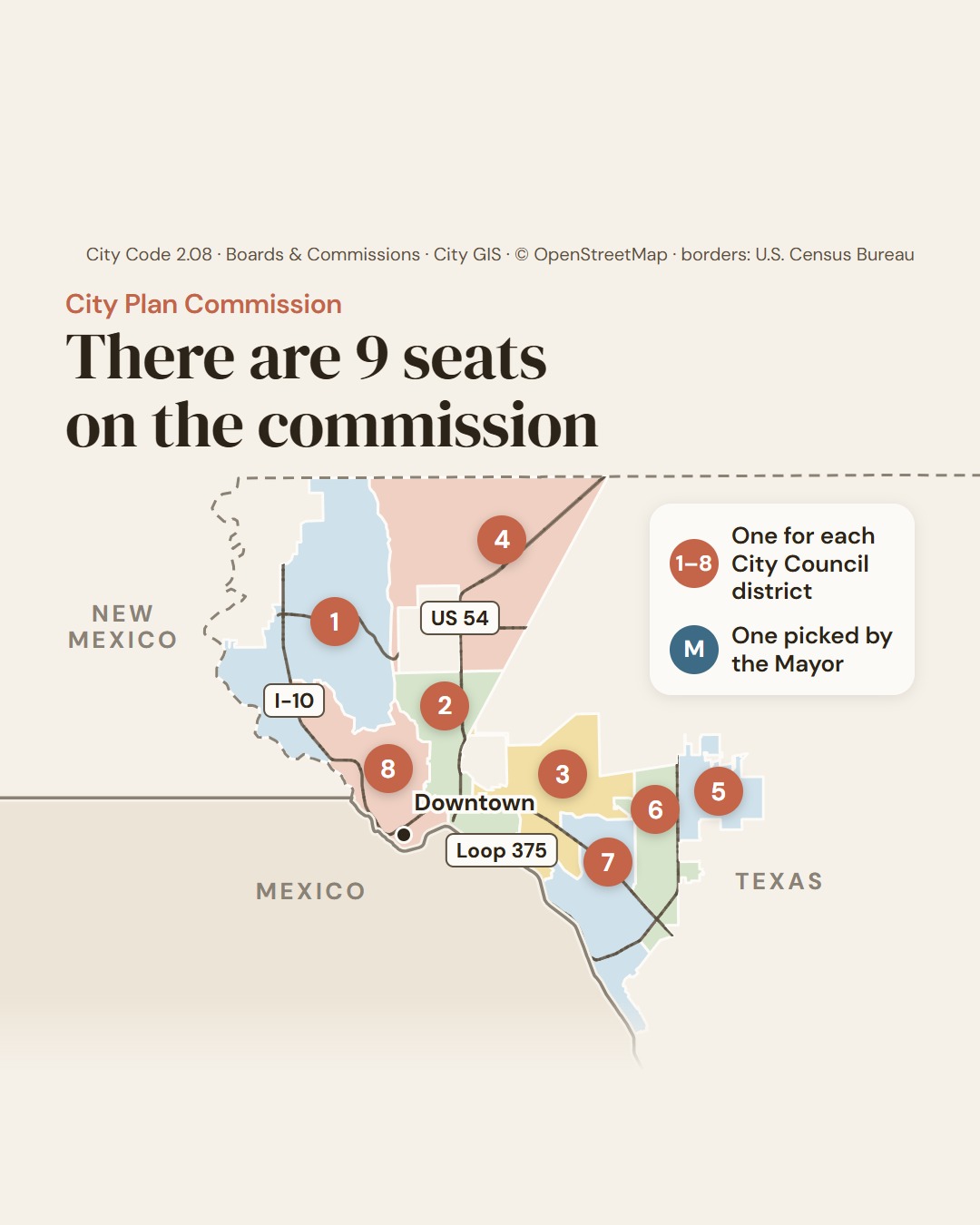
    It decides most subdivision plats itself, and every rezoning goes to it before City Council. It applies rules made to promote health, safety and the general welfare.

    Who sits on it
    Nine seats: one for each City Council district, and one named by the Mayor.
    When it meets
    Every other Thursday at 1:30 p.m.
    How to speak
    Sign up to speak on the meeting day, before 1:30 p.m.
  2. City Council

    Final vote on a rezoning

    Holds the final hearing on a rezoning.

    Who sits on it
    A representative for each of the eight districts, and the Mayor.
    When it meets
    Every other Tuesday at 9:00 a.m.
    How to speak
    To speak during Call to the Public, sign up by 9:00 a.m. on the Tuesday of the meeting.

The county

Commissioners Court

Votes on county business

Who sits on it
The County Judge and four commissioners, one for each precinct.
When it meets
Mondays at 9:30 a.m. at the County Courthouse.
How to speak
Each speaker gets five minutes.
Sources

Where this comes from, read September 20, October 2 and October 6, 2026: City of El Paso · Boards and Commissions · City of El Paso · Planning FAQs · City of El Paso · City Clerk · El Paso County · Public Meetings · El Paso County · Public Comment · City of El Paso · City Code, zoning (Title 20) · City of El Paso · City Code, subdivisions (Title 19) · State of Texas · Local Government Code, chapter 212 · Supreme Court of Texas · Schroeder v. Escalera Ranch (2022) · City Plan Commission · Agenda, October 8, 2026 · City of El Paso · City Council meeting calendar, 2026 · City of El Paso · Legistar meeting calendar · City of El Paso · City Charter

How a public meeting works

Your voice is part of the process.

Most decisions on this site happen in public meetings. Anyone may attend, and most meetings take public comment.

Public meetings are open to everyone.

  1. The agenda is posted

    By law, at least three business days before the meeting. That is your window.

  2. Staff explain each item

    A short report says what is asked and what staff recommend. We link it.

  3. The public speaks

    Usually three to five minutes each. Sign up before the meeting or at the door.

  4. They vote

    Some items need two votes at two bodies. We show you which step you are at.

This week

{week_count} meeting this week.meetings this week.

How to speak at a meeting

Anyone can speak for a few minutes.

You do not need a lawyer, a group, or a reason. You need to sign up on time and say one clear thing.

  1. Find the item number on the agenda.

  2. Sign up before the deadline.

  3. Say who you are, where you live, and what you want them to do.

    For example: My name is your name. I live in your neighborhood. I’m asking you to what you want them to do.